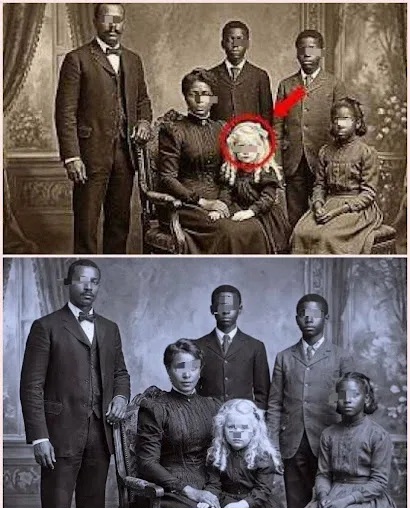
Rebecca found the studio’s advertising from 1897. Morrison and Sons was 1 of Atlanta’s premier photography establishments, serving both white and Black clients in separate sessions. A sitting cost $8.50, nearly a week’s wages for most workers. The Washingtons had spent significant money to create a formal document declaring Clara’s place in their family.
In an era when most families with children like Clara hid them completely, this portrait was an act of defiance.
Rebecca began searching for evidence of how the Washingtons had kept Clara safe while raising her openly, and she found it in unexpected places. In the Atlanta Independent, a Black-owned newspaper, she found a classified advertisement from March 1898: Washington and Sons Tailoring now offering ladies’ and children’s garments, specializing in lightweight fabrics with superior coverage and comfort for summer wear.
Rebecca understood immediately. Thomas Washington had expanded his business to create protective clothing for Clara: long sleeves, high collars, and tightly woven fabrics that would block ultraviolet light. He had made it a general service so it would not draw attention specifically to his daughter’s needs.
The 1900 census revealed another layer of protection. The Washington household included Ruth’s unmarried younger sister, Anna, age 34, listed as residing with the family, occupation: domestic duties. But cross-referencing with church records showed that Anna taught Sunday school and coordinated children’s programs. She was not merely living with them. She was Clara’s full-time caretaker and guardian.
Property records from 1895 showed that the Washingtons had chosen their home carefully. It was a 2-story house on Bell Street with covered front and rear porches, mature shade trees on the property, and a northern exposure. They had selected a place where Clara could be outside safely, protected from direct sunlight by shade and covered spaces.
The modified school arrangement Rebecca had found earlier now made more sense. Gate City Colored School records from 1902 showed Clara attending only early morning and late afternoon sessions, with approved home instruction to supplement the rest. The administrators had worked with the family to create a schedule that allowed Clara to attend when the sun was less intense while receiving additional education at home during the peak daylight hours.
Rebecca found 1 more crucial detail in Big Bethel AME Church records: a notation from 1899 stating that special provisions had been made for the Washington family seating, north side, shaded location, accommodation approved by council. Even the church had adapted its space to protect Clara, giving the family a permanent seat where she could attend services without direct sun exposure through the windows.
The pattern was unmistakable. The Washingtons had built an entire infrastructure around Clara’s needs, using their business success and community standing not to hide their daughter but to create a life in which she could participate safely. Their church, their school, and their neighbors on Auburn Avenue had helped them do it.