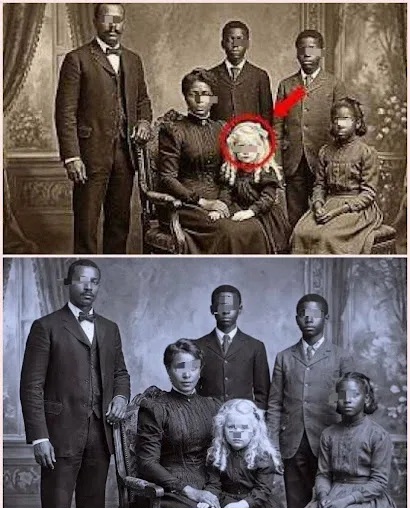
This was not simply 1 family’s love story. It was evidence of a broader network of Black Atlantans who chose protection and inclusion over the prejudice that dominated the society around them.
Rebecca knew that finding Clara’s own words would be nearly impossible. Most Black women from that era left few written records, and someone with Clara’s medical challenges would be even less likely to appear in historical documents. She searched anyway.
She contacted the Atlanta University Center archives and explained what she was looking for: anything related to Clara Washington, born 1891, who would have been a young woman in the 1910s.
The archivist called back 4 days later, excitement clear in her voice. “I found something. Not much, but it’s definitely her.”
Rebecca drove to Atlanta that afternoon. In a temperature-controlled reading room, the archivist carefully placed a worn ledger on the table.
“This is from the Phyllis Wheatley YWCA,” she explained, “which served Black women and girls in Atlanta from 1910 through the 1960s. They offered classes, cultural programs, and social activities.”
She opened the ledger to a marked page in the attendance records for a 1913 poetry reading series. There it was: Clara M. Washington, age 22. The archivist turned more pages. Clara appeared again in a 1914 music appreciation course and in 1915 as a member of the literary discussion group. She had participated actively in the organization’s cultural and social life.
Rebecca felt tears forming. Clara had lived a social life as a young woman. She had not been isolated or hidden.
Then the archivist produced a slim folder. “This is what I really wanted to show you.”
Inside was a single sheet of paper, a handwritten contribution to the YWCA’s 1916 newsletter titled “On Being Seen.” The author was listed as C. M. Washington.
Rebecca read carefully, her hands trembling slightly